Title: The “Rembrandt of All Manors” — The Bailiwick of Ennerdale
Why the Bailiwick of Ennerdale stands apart and why ownership carries amazingly unique prestige
Introduction
The Bailiwick of Ennerdale is no ordinary manor. It is a rare fusion of historical, legal,
environmental and symbolic value. Rooted in a royal forest and liberty, transferred by Crown and Parliament, and
preserved into the modern era, it stands as the quintessential “Rembrandt of all manors”.
1. Heritage & Provenance
-
The Bailiwick of Ennerdale traces its origins to at least 1251 AD, notably as a
Crown-forest and Free Chase under medieval forest law. See “Historical Pedigree and Provenance of the
Bailiwick, Liberty, Manor, and Forest of Ennerdale.”
-
It was once part of the great Forest of Copeland, and in 1338 the region was divided into bailiwicks; Ennerdale emerged as a distinct jurisdiction
(“between the Rivers Ehen and Derwent”) with its own bailiff and autonomy.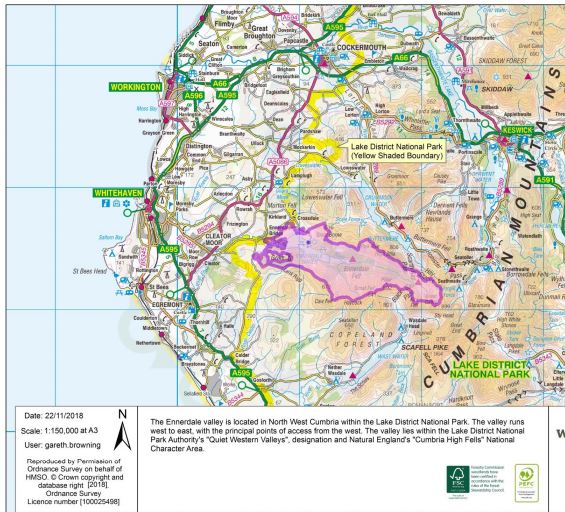
-
In 1822, the Crown (via the Commissioners of HM Woods & Forests) sold the Bailiwick/Liberty/Forest in fee simple to the Earl of Lonsdale, thus alienating
the full array of rights (land, courts, liberties, mineral/foreshore rights) to private hands.
-
Because of this legal conveyance, Ennerdale claims to be “the only privately owned
bailiwick in the world and one of the largest private manors in all
England.”
2. Legal and Jurisdictional Privileges
Owning the Bailiwick of Ennerdale means inheriting more than land — it involves inheriting a
set of rights and formal privileges:
-
The right to hold a Court Leet and Court Baron, ceremonial and manorial courts rooted in medieval
practice.
-
Authority to create and use seals, crests and coats of arms tied to the Bailiwick’s
identity.
-
Ceremonial appointments of local officers
(bailiff, foresters, stewards) and the authority to found and maintain orders of merit or other honorary
titles.
-
Rights tied to forestry, water, fishery, and commons — under the ancient privileges of
the liberty and forest structure.
These attributes combine to give the Bailiwick a pseudo-palatine
status: quasi-sovereign within its domain, setting it apart from standard manorial holdings.
3. Scale & Landscape Value
-
The Bailiwick spans one of the largest historic manors in England, covering thousands
of acres in Cumbria.
-
Its composition as forest, valley, commons and historic estate land adds environmental
and intrinsic value, not just title.
-
Because it once held Crown forest status, its lands carry both historical weight and
practical interest (e.g., water rights, scenic value). ennerdale.org
4. Unique “Rembrandt” Status
Why call it the “Rembrandt of all manors”? Consider:
-
It is claimed to be possibly the only bailiwick and liberty in English (and world) history sold outright from
the Crown with full jurisdictional rights.
-
Its combination of size + autonomy + historic rights + legal conveyance into private
hands is virtually unmatched.
-
The name “Rembrandt” suggests a masterpiece — something rare, fine, rich in provenance
and artistic value. Ownership becomes a statement of distinction, heritage and exclusivity.
5. Benefits of Ownership
Putting it in terms that appeal to visitors or potential stakeholders:
-
Court Leet and Powers - Rights in Fee Simple to have your own
jurisdiction and ceremonial powers within the law.
-
Prestige: Ownership links you to one of the most exceptional
manorial/feudal titles in England.
-
Governance & Ceremonial Rights: You possess rights and privileges
that are more than ornamental — they represent a direct lineage of legal and social authority.
-
Heritage & Conservation Value: The estate is embedded in historic
landscape, natural value and cultural tradition — offering storytelling, brand-value, heritage
tourism potential.
-
Commercial & Symbolic Utility: Beyond the title, there are manorial
services, registration/quality marks, heritage licensing, and cultural heritage initiatives.
-
Unique Legal Status: The fact it was alienated by Crown and Parliament
makes it a rare asset — a title with documented provenance and exceptional status.
6. Modern Stewardship
Ownership today is not simply about preserving the past, but stewarding a legacy: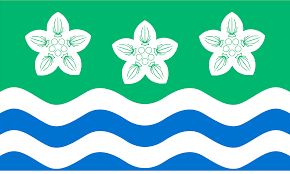
-
There is emphasis on environmental and sustainable management of the forest, water and
land.
-
The Lordship supports historical education, cultural diplomacy, heritage and
international recognition.
-
The Bailiwick offers heritage law seminars, archival preservation and services that
connect to modern educational and governance frameworks.
-
Support of Chiefs, Clans, and Gaelic and Celtic "tribal like" Powers.
Conclusion
In owning the Bailiwick of Ennerdale, you are acquiring far more than land. You are acquiring
a legacy: a deeply rooted institution of English legal history, a majestic landscape, and a title that exudes
heritage, only-in-England distinction, and modern utility. It truly deserves to be called the “Rembrandt of all
manors”.
⚖️ Why The Lordship of Ennerdale Bailiwick can be seen as “better than peerage”
-
Peerage titles (Duke, Earl, Baron, etc.) are personal dignities created
by the Crown. They can be hereditary or for life, but they are always subject to the Crown’s prerogative
and parliamentary framework.
-
Ennerdale Bailiwick was sold outright in fee simple, meaning the
jurisdiction itself became private property. That alienation was permanent by King of England and Hanover
Germany — it did not revert to the Crown. Its size being in the top 20 manors in all England is also
important.
-
Because it was conveyed by both King and Commissioners/Parliament, the style
Lord of the Bailiwick and Liberty of Ennerdale is not just a courtesy but a
state‑sanctioned legal designation and jurisdiction tied to property rights.
-
Unlike a peerage, which is a dignity without ownership, Ennerdale carried jurisdictional
substance (court leet powers) and was alienated as a real right. That permanence and independence
from Crown reversion is what makes it arguably “better” in a structural sense than any manor and liberty in
all of England.
📊 Comparison: Peerage vs. Ennerdale Bailiwick
|
Feature |
Peerage Title |
Ennerdale Bailiwick |
|
Origin |
Crown prerogative (Letters Patent,
writ, or Act) |
Alienation in fee simple by
King & Parliament |
|
Nature |
Personal dignity, hereditary or
life |
Jurisdictional estate, permanent property
right |
|
Reversion |
Can be extinguished, merged,
or limited by Crown |
No reversion — sold outright
in perpetuity |
|
Authority |
Ceremonial precedence, legislative rights
(historically) |
Jurisdictional powers (court leet),
manorial rights |
|
Recognition |
Nobility law (peerage rolls) |
Property/manorial law, sanctioned by
Parliament |
|
Status Today |
Survives as nobility titles |
Survives as historic manorial
lordship with unique origin |
✅ Conclusion: The holder of Ennerdale does not sit in the British peerage, but they do
hold something structurally unique: a permanent, state‑sanctioned jurisdictional title alienated in fee
simple. In doctrinal terms, that can be argued as “better than peerage” because it is not dependent on
Crown prerogative — it is a property right with a recognized style, conveyed by both King and Parliament for
value.
|
